BreakTag reveals how genome-editing tools work, opening the door towards safer and more precise gene therapies
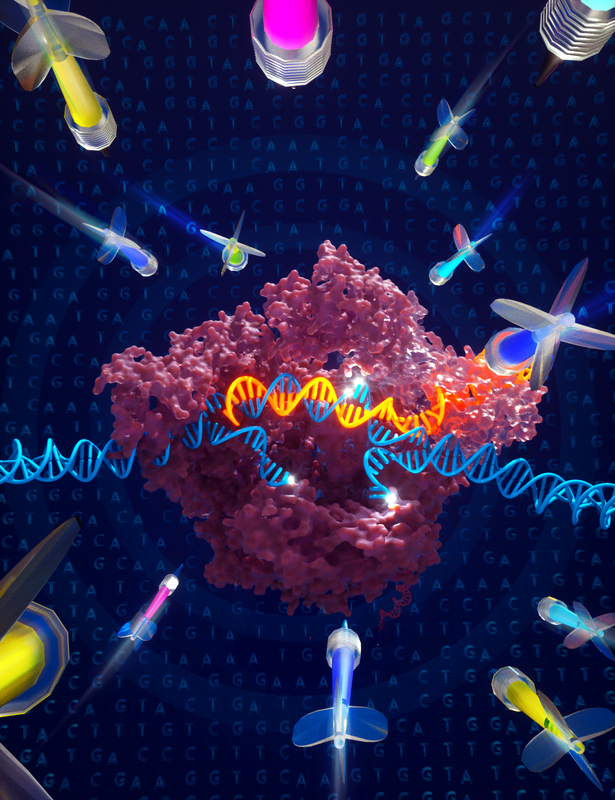
The lab of Vassilis Roukos at the Institute of Molecular Biology (IMB) in Mainz, Germany, has developed a new method called BreakTag that marks a major step forward in improving the accuracy and safety of genome editing. This method, which they describe in detail in the scientific journal Nature Protocols, enables scientists to see exactly where genome-editing tools cut DNA — and crucially, how they cut it. This unprecedented level of detail provides crucial information that helps researchers create better tools for treating genetic diseases.
Genetic diseases are caused by mutations in the DNA – errors such as a missing or extra letter in the genetic code. Genome-editing technologies such as CRISPR–Cas9 can fix these errors by making targeted cuts at the site of the mutation that the cell then repairs imperfectly, introducing small changes that can correct the mutated gene. But to use CRISPR–Cas9 in patients, scientists must know precisely where and how it cuts the DNA to ensure it does not cut at the wrong places. Obtaining this information is essential for developing effective therapies for genetic diseases. It is also particularly important for safety and avoiding unintentional side effects.
But until now, no method could provide a complete, unbiased picture of where and how CRISPR–Cas9 cuts across the entire genome.
A multi-level view of genome-editing
BreakTag allows scientists to understand for the very first time how genome-editing nucleases such as CRISPR–Cas9 cut DNA across the entire genome. It 1) identifies every location in the DNA where CRISPR–Cas9 cuts, 2) measures how often it cuts at each site, and 3) determines whether the resulting DNA ends are blunt or staggered. This is important because staggered DNA ends are repaired with more predictable outcomes, while blunt ends can lead to more random outcomes. Being able to control whether the cuts have blunt or staggered ends therefore allows researchers to better control the genome editing outcome and design safer, more reliable therapies.
“As the field advances toward engineering CRISPR enzymes for clinical applications, we believe there is a significant need for tools that can comprehensively characterise these enzymes within a single assay”, says Gabriel Longo, first author of the paper.
The new method works by collecting and sequencing all the pieces of DNA created after a genome-editing tool has cut the DNA. This allows researchers to obtain a detailed, genome-wide map of where it has been cut. Vassilis’ team also developed a user-friendly software that they named BreakInspectoR to analyse the data, as well as a machine-learning model called XGScission that scientists can use to predict where a genome-editing tool will cut DNA and what type of break it will generate. The method is practical and fast, making it suitable for testing many different genome editing tools or strategies at once.
A major advance toward safer, more predictable gene therapies
BreakTag will give scientists the information they need to choose and design the best genome-editing tools for each job, helping them avoid making unwanted changes and steer the repair process toward a desired, predictable outcome. This is especially important when it comes to developing personalised treatments to correct an individual patient’s specific mutation.
“BreakTag gives us an unbiased view of how genome-editing enzymes behave across the genome,” says Vassilis. “This is essential for designing gene-editing strategies that are not only effective but also safe enough for use in patients.”
The researchers expect BreakTag to become an important resource for developing the next generation of genome-editing technologies — and to help bring the promise of precise, personalised gene therapy closer to reality.
Further details
Further information can be found at https://doi.org/10.1038/s41596-025-01271-4
Vassilis Roukos is a Group Leader at the Institute of Molecular Biology (IMB) and an Assistant Professor at the University of Patras, Greece. The research in this publication was carried out at IMB. Further information about research in the Roukos lab can be found at www.imb.de/roukos and https://roukoslab.com.
A patent application has been filed for the BreakTag technology (WO 2024/033378 A1), https://patents.google.com/patent/WO2024033378A1/en
About the Institute of Molecular Biology gGmbH
The Institute of Molecular Biology gGmbH (IMB) is a centre of excellence in the life sciences that was established in 2011 on the campus of Johannes Gutenberg University Mainz (JGU). Research at IMB focuses on the cutting-edge fields of epigenetics, genome stability, ageing and RNA biology. The institute is a prime example of successful collaboration between a private foundation and government: The Boehringer Ingelheim Foundation has committed 154 million euros to be disbursed from 2009 until 2027 to cover the operating costs of research at IMB. The State of Rhineland-Palatinate has provided approximately 50 million euros for the construction of a state-of-the-art building and is giving a further 52 million in core funding from 2020 until 2027. For more information about IMB, please visit: www.imb.de.
About the Centre for Healthy Ageing
The Centre for Healthy Ageing (CHA) is a virtual research centre launched in 2021 that brings together scientists in basic and clinical research from across Mainz that focus on ageing and age-related diseases. These findings can be used to promote healthy ageing and to find treatments that could prevent or cure age-related disease. For more information, please visit: www.cha-mainz.de.
Boehringer Ingelheim Foundation
The Boehringer Ingelheim Foundation is an independent, non-profit organization that is committed to promoting the medical, biological, chemical, and pharmaceutical sciences. It was established in 1977 by Hubertus Liebrecht (1931–1991), a member of the shareholder family of the Boehringer Ingelheim company. Through its funding programmes Exploration Grants, Plus 3, and Rise up!, the Foundation supports excellent scientists during critical stages of their careers. It also endows the prestigious Heinrich Wieland Prize and awards for emerging scientists. Additionally, it funds institutional projects combining AI and biomedicine, such as the AITHYRA institute in Vienna and a new research unit at the Center for Systems Biology in Dresden (BioAI Dresden). Other supported institutions include the Institute of Molecular Biology (IMB) in Mainz and the European Molecular Biology Laboratory (EMBL) in Heidelberg, both in Germany.
Press contact for further information
Dr Ralf Dahm, Director of Scientific Management
Institute of Molecular Biology gGmbH (IMB), Ackermannweg 4, 55128 Mainz, Germany
Phone: +49 (0) 6131 39 21455, Email: press(at)imb.de